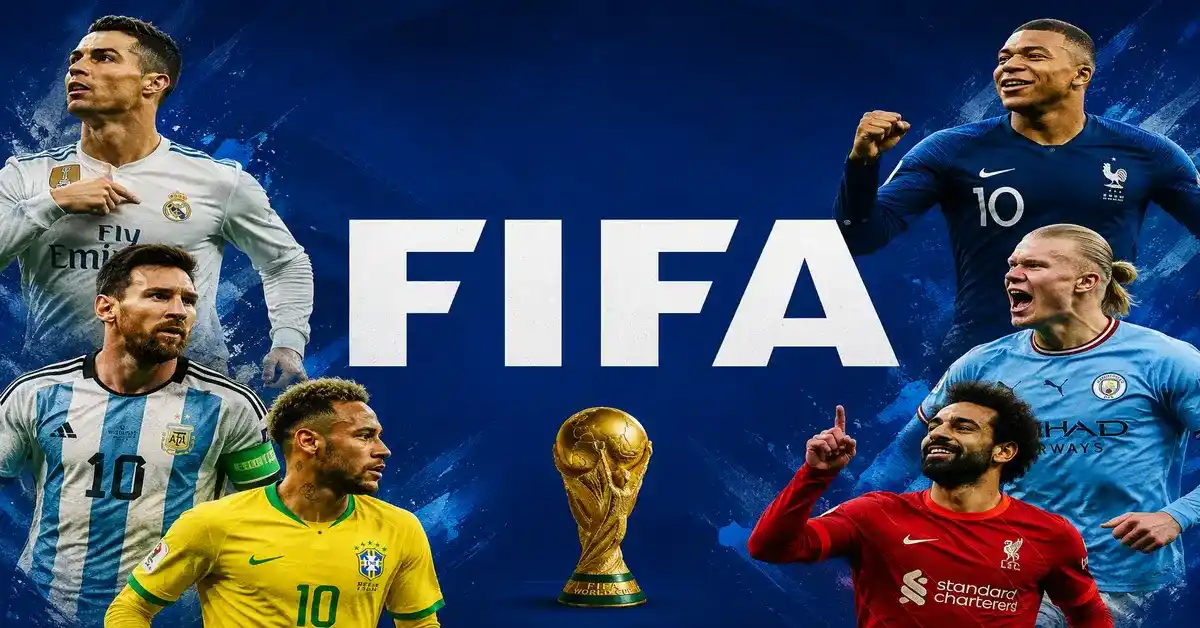
FIFA World Cup 2026: Guide for Beginners and Football Fans
Introduction
The global football party is underway, and it is bigger than anything we have seen before. The FIFA World Cup 2026 marks a massive shift in how international football tournaments operate. For the first time, three nations are sharing hosting duties, and the team count has grown significantly.
Whether you are a casual fan tracking your first tournament or a seasoned supporter counting down to the final, this breakdown covers exactly what to expect over the next few weeks of intense competition.
What is the FIFA World Cup?
The World Cup is the biggest single-sport event on earth. Held every four years, it brings together national teams from every corner of the planet to compete for the title of world champion.
The tournament started back in 1930 with just 13 teams playing in Uruguay. Over the decades, it grew into a cultural phenomenon that pulls in billions of television viewers. Winning this trophy represents the peak of a football player’s career, cementing their name in sports history.
FIFA World Cup 2026 Overview
The 2026 tournament is an ambitious undertaking. The United States, Canada, and Mexico have joined forces to host the event across 16 different host cities.
A total of 48 teams are competing, making this the largest field ever assembled for a World Cup. The entire event spans 39 days, packing 104 matches into a tight summer window. This scale makes the 2026 tournament a landmark moment for global sports infrastructure.
New Format of FIFA World Cup 2026
48-Team Expansion
Moving from 32 teams to 48 opens the door for more nations to experience the sport’s biggest stage. It means regular tournament heavyweights face a much wider variety of playing styles. Smaller footballing nations have earned a rare chance to test themselves against global giants, shaking up traditional expectations.
Group Stage Structure
The 48 teams are split into 12 groups of four. Every nation plays three group-stage games. The top two teams from each group move on automatically. To fill out the bracket, the eight best third-placed teams across all 12 groups also earn a ticket to the next phase, keeping group matches highly competitive until the final whistle.
Knockout Stage Overview
Because 32 teams now advance out of the group stage, the elimination phase begins an entire round earlier than in previous tournaments. If any match remains tied after 90 minutes of regulation, teams play 30 minutes of extra time, followed by a penalty shootout if necessary.
Round of 32 & Round of 16
- Round of 32: The brand-new starting tier of the single-elimination bracket, instantly cutting the field from 32 teams down to 16.
- Round of 16: The surviving 16 teams face off in classic win-or-go-home fashion.
Quarterfinals
- The Stakes: The final eight teams battle it out across four high-stakes matches to see who earns a spot in the final four.
Semifinals
- The Stakes: The final four teams compete in two massive fixtures. The winners move on to the grand finale, while the non-advancing sides prepare for the third-place playoff match on July 18.
The Final
- The Venue: MetLife Stadium (New York/New Jersey)
- The Ultimate Prize: The final two teams go head-to-head to crown the world champion. Under this new expanded layout, the tournament winner will have successfully survived seven total matches (3 group stage games plus 4 consecutive knockout rounds) to lift the trophy.
Qualification Process
Earning a spot in this tournament took years of planning and regional qualifiers. FIFA splits the world into six continental confederations to manage this process fairly:
- UEFA (Europe): Received 16 direct slots for its highly competitive leagues.
- CAF (Africa): Expanded to 9 direct slots, giving more African nations a regular platform.
- AFC (Asia): Secured 8 direct spots, reflecting the massive growth of football across the region.
- CONMEBOL (South America): Traditional powerhouses took 6 direct tournament entries.
- CONCACAF (North/Central America): Received 6 slots, including automatic entries for hosts USA, Canada, and Mexico.
- OFC (Oceania): Gained 1 direct qualification slot for the first time.
The remaining spots were settled through intense intercontinental playoff matches, ensuring every region had a final shot at entering the main draw.
Teams to Watch in 2026
The usual giants arrived with heavy expectations. Argentina looks to protect their global status, while Brazil brings its traditional attacking flair. France relies on deep squad talent, and Germany enters with an organized, high-tempo system.
Keep an eye on emerging nations from Africa and Asia. Morocco proved in recent years that rigid defensive organization can dismantle elite European teams. Rapidly improving squads like Japan and Australia bring high work rates and tactical discipline that can surprise elite groups during the group stages.
Key Players to Watch
Elite tournaments are defined by individual talent. Established global stars carry the pressure of delivering match-winning moments under immense media scrutiny. Their ability to break down deep defensive structures dictates how far their countries progress.
This tournament also serves as a launching pad for young talent. Elite scouts watch closely as teenage wingers and disciplined young midfielders get their first minutes on the world stage. A strong showing over these three weeks can alter a young player’s career trajectory overnight.
Match Schedule & Tournament Dates
The tournament schedule moves at a relentless pace across multiple time zones. The action started on June 11 at the historic Estadio Azteca in Mexico City.
The full tournament phase dates follow a strict timeline:
| Tournament Phase | Date Range |
| Group Stage | June 11 – June 27, 2026 |
| Round of 32 | June 28 – July 3, 2026 |
| Round of 16 | July 4 – July 7, 2026 |
| Quarter-finals | July 9 – July 11, 2026 |
| Semi-finals | July 14 – July 15, 2026 |
| Final Match | July 19, 2026 |
The ultimate final takes place on July 19 at the New York New Jersey Stadium, bringing the grueling 104-match schedule to a close. For comprehensive live match tracking and detailed schedule grids, fans rely on Total Sportek for real-time updates.
FIFA World Cup 2026 Winner Predictions
Predicting a winner is harder than usual due to the extra knockout round. The team that lifts the trophy needs immense squad depth to handle the physical toll of playing eight matches instead of the traditional seven.
France and Brazil remain logical favorites because their deep pools of domestic talent allow them to rotate players without losing quality. However, tournament football favors teams that peak in July rather than June. A compact, defensively solid team could easily replicate a deep run if they find consistency early in the knockout bracket.
FIFA World Cup Trophy & Legacy
The FIFA World Cup trophy is the most recognizable prize in sports. Made of 18-carat gold with a malachite base, it depicts two human figures holding up the Earth.
Unlike other sports tournaments, nations do not get to keep the original trophy permanently. Winners receive a gold-plated replica, while the original remains safe at FIFA’s headquarters in Switzerland. Past icons like Pelé and Maradona built their global legacies around this specific prize, making it the ultimate symbol of footballing success.
Why FIFA World Cup 2026 is Special
This tournament breaks the traditional single-host mold. Spanning from Vancouver down to Mexico City and across to Miami, the sheer geographic diversity requires teams to manage immense travel schedules and varying climate conditions.
The sheer volume of matches means fans get more live football than ever before. With 104 matches broadcast worldwide, the cultural footprint of this tournament will reach communities that have never previously hosted World Cup games.
Final Thoughts
The 2026 edition is shifting the boundaries of international football. The tournament structure demands more endurance, better squad depth, and pristine logistics. While the scale is massive, the core appeal stays the same: simple, high-stakes football where any nation can shock the world on any given day.