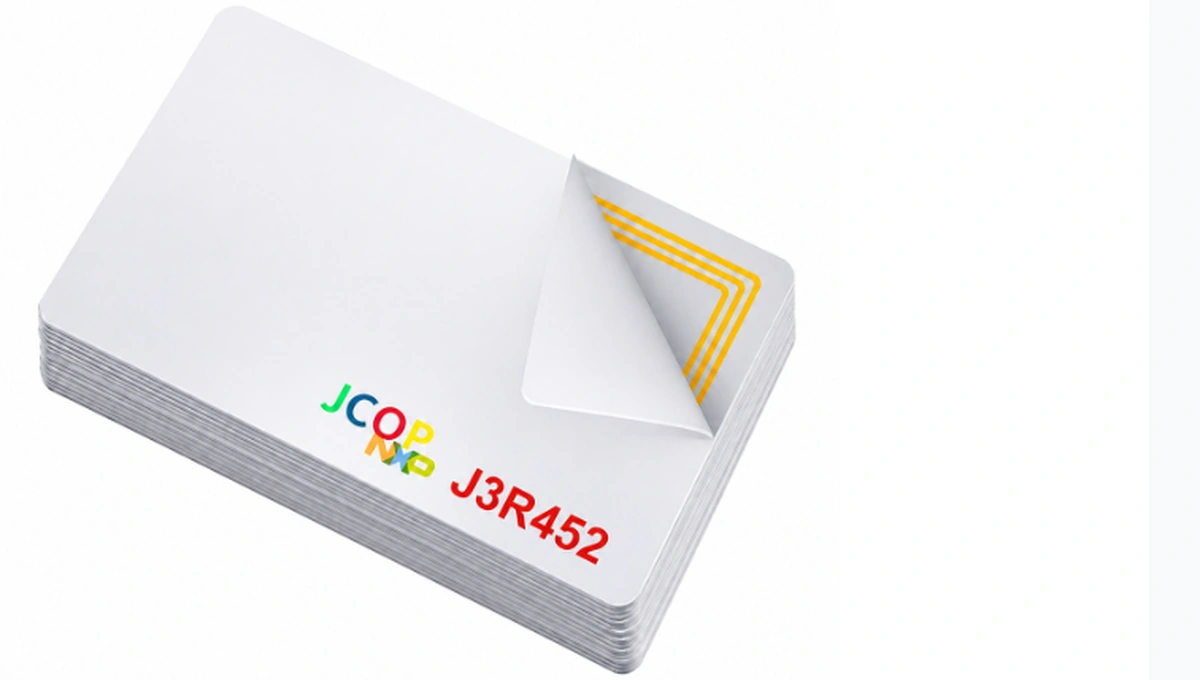
What cutting-edge encryption algorithms does the J3R452 Java Smart Card natively support?
In the evolving landscape of secure digital identity and payment systems, the strength of a smart card ultimately hinges on its ability to execute cryptographic algorithms rapidly and reliably. As a specialized Java Card manufacturer, DCCO focuses on providing platforms with proven, high-security cryptographic capabilities.
The J3R452 Java smart card is an exceptional platform that natively supports a comprehensive suite of modern cryptographic algorithms, enabling organizations to meet the most stringent security requirements without compromising performance or interoperability.
Cryptographic Foundation of the J3R452 Java Smart Card
The cryptographic foundation of the J3R452 Java smart card is built upon a hardware-accelerated secure element that executes algorithms within a protected environment. As a leading Java Card manufacturer, DCCO emphasizes platforms that combine a certified Java Card Virtual Machine with a dedicated cryptographic coprocessor.
This architecture allows the J3R452 Java smart card to efficiently perform complex operations while isolating sensitive keys and intermediate values from external observation.
The card supports both symmetric and asymmetric encryption, enabling a wide range of security services, including mutual authentication, data confidentiality, digital signatures, and secure key exchange.
Native support allows developers to invoke these algorithms through standard Java Card APIs while taking advantage of hardware acceleration, helping the card meet the performance requirements of both contact and contactless transactions.
Symmetric Cryptographic Algorithms Supported by the J3R452 Java Smart Card
Symmetric encryption is a core mechanism for high-speed data protection on the J3R452 Java smart card. The platform natively supports the Advanced Encryption Standard (AES) across various key lengths, including 128-bit, 192-bit, and 256-bit configurations. AES has become the industry standard for bulk data encryption, and numerous government and financial security frameworks require organizations to use it as part of their security practices.
In addition to AES, the J3R452 Java smart card supports Triple DES (3DES) to ensure compatibility with legacy systems that still rely on this algorithm. Hardware acceleration enables the card to complete both AES and 3DES operations within the strict time requirements of real-world transactions.
The card supports multiple modes of operation—such as CBC, ECB, and CMAC—enabling developers to implement diverse secure messaging and data protection schemes. These symmetric encryption capabilities enable the Java smart card to secure data at rest as well as data in transit during communication with host systems.
Asymmetric Cryptography and Public-Key Algorithms on the J3R452 Java Smart Card
The asymmetric cryptography capabilities of the J3R452 Java smart card lay the foundation for robust authentication and non-repudiation services. The platform natively supports RSA keys up to 2048 bits, and depending on the specific model and certification requirements, it can also support 3072-bit or 4096-bit keys in many configurations. RSA remains critical for digital signatures, certificate-based authentication, and secure key transport.
Elliptic Curve Cryptography (ECC) is another core strength of the J3R452 Java smart card. Supporting a wide range of standard curves—including those recommended by NIST and Brainpool—the card enables efficient public-key operations using significantly shorter key lengths than RSA while maintaining equivalent security levels.
ECC is particularly valuable in contactless and mobile application scenarios where high performance and energy efficiency are paramount. As a professional Java smart card manufacturer, DCCO ensures that the implementation of these asymmetric algorithms offers strong resistance against side-channel attacks.
Hash Functions and Message Authentication
Hash functions and Message Authentication Codes (MACs) round out the cryptographic capabilities of the J3R452 Java smart card. The platform natively supports the SHA-2 family of hash algorithms (including SHA-256 and SHA-384), which are essential for modern security protocols and digital signature schemes. Additionally, the platform supports SHA-1 for legacy system compatibility, though migration to more secure hash functions is recommended for new applications.
Message authentication is implemented via CMAC (based on AES) and HMAC mechanisms. These mechanisms allow the Java card to verify the integrity and authenticity of data exchanged with terminals or back-end systems. Hardware acceleration ensures that hash and MAC operations maintain ultra-low latency, even during complex, multi-step transactions.
With support for robust hash and MAC algorithms, the J3R452 Java smart card supports secure communication protocols defined by GlobalPlatform and other industry standards.
Practical Key Management and Security Algorithm Implementation
The way key management and security algorithms are implemented determines the extent to which the cryptographic capabilities of the J3R452 Java Smart Card translate into actual security assurance. The platform supports secure key generation, storage, and usage within the protected boundaries of the Secure Element.
The card keeps private keys securely stored inside its protected environment and never exposes them in plaintext. It also performs all cryptographic operations within a hardware-protected environment.
As an experienced Java Smart Card manufacturer, DCCO provides best-practice guidance on algorithm selection, key length configuration, and secure personalization. Organizations can establish policies mandating the use of high-strength algorithms while simultaneously accommodating the needs of legacy system transitions.
Secure channels established during personalization and subsequent management operations further ensure the integrity of cryptographic data.
Performance and Certification Considerations for Cryptographic Operations
Performance and certification considerations are crucial when evaluating the J3R452 Java Smart Card. The card supports hardware acceleration for AES, RSA, ECC, and SHA operations, enabling it to meet the stringent timing requirements of payment and transit applications. Independent testing confirms consistent cryptographic performance across all supported algorithms.
The platform benefits from high-level security certifications that verify not only the correctness of algorithm implementations but also their resilience against known attack vectors. These certifications provide independent assurance that the Java Smart Card’s cryptographic services comply with the requirements of regulated industries.