
Trail Running Etiquette: Sharing Woodland Routes with Wildlife
Your watch says the next kilometre should be faster. The path ahead bends into trees, a walker is approaching and something moves beside the trail. On a track, you might hold the pace. In woodland, the better decision may be to ease off and look ahead.
Trail running means sharing a place with more than other runners. Wildlife resources such as Viltnemnda can help you learn about the animals and signs you may notice outdoors. That background knowledge adds interest to a run, but good trail manners begin with practical choices: where you run, how you pass and when you are willing to change the plan.
This guide focuses on everyday woodland running rather than remote mountain routes or race regulations. Follow the current advice for the place you visit. Access arrangements differ between locations, and an online route does not replace local information.
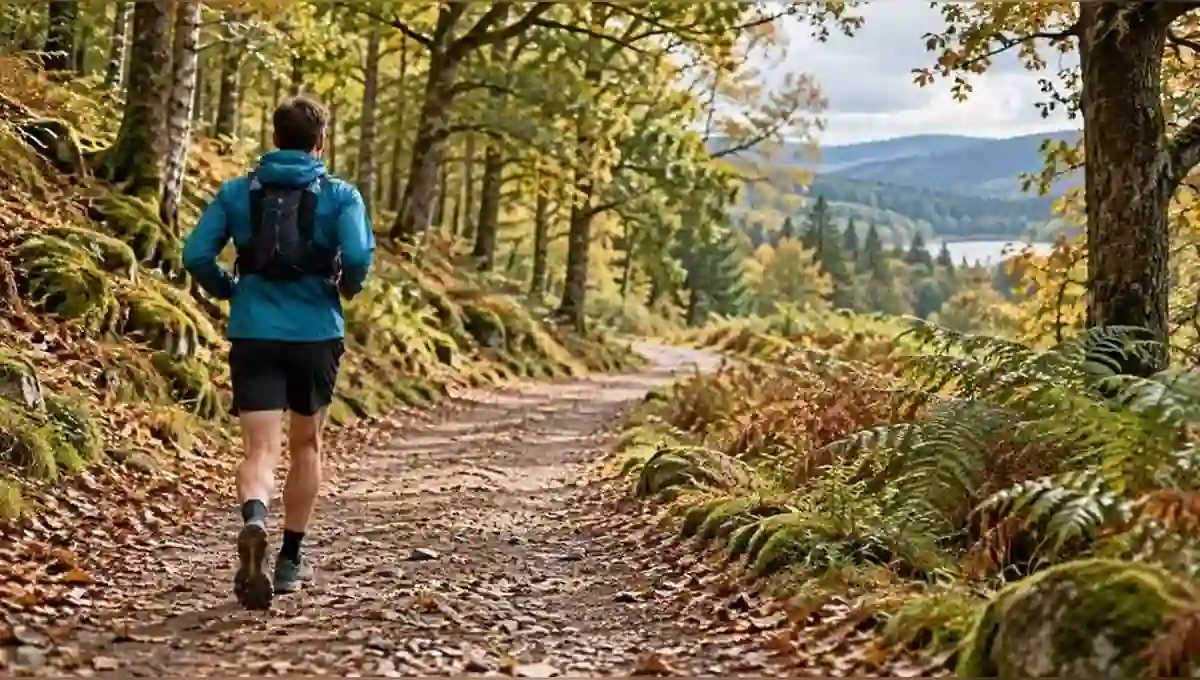
AI-generated illustration of a woodland run; not a photograph of a named route.
Choose a Route That Suits the Session
Decide what you want from the run before selecting the path. A relaxed loop with room to slow down is different from a timed interval session that depends on an uninterrupted stretch. Trying to force both onto the same narrow woodland trail can make the outing frustrating.
Look for an established running or walking route where running is permitted. Forestry England, for example, provides information on waymarked running trails and routes through its forests. Use the relevant land manager’s current information to check the particular place you intend to visit.
Think about the return journey as well as the outward section. Could you shorten the route if conditions change? Is there a simple alternative that does not involve cutting through vegetation or guessing at an unfamiliar path?
For a first visit, make learning the route part of the plan. A shorter run that shows you the junctions, surfaces and busy sections gives you something useful to build on next time.
Check the Noticeboard Before the Watch
Pause at the entrance and read current notices. Look for route diversions, forestry work, access information and advice about sensitive areas. A saved route file may not reflect what has changed on the ground.
Do not read a sign as a challenge to solve by finding a way around it. Follow the indicated alternative or choose another suitable route. If the message is unclear, check with the land manager before making that section part of your regular run.
Keep Your Pace Flexible on Shared Paths
A training target is useful for organising a session, but it should not decide how closely you pass someone or whether you can stop within the space you can see.
Ease off before blind bends and narrow sections. Give other visitors time to notice you, and ask calmly before passing when necessary. If there is no comfortable room, wait. A few seconds on a shared path are not a failure of the session.
The same approach helps when something unexpected appears ahead. If you are already running at a pace that suits the sightline and surface, you have more options than simply braking at the last moment.
For club runs, explain this before setting off. Say where the group will regroup and make it clear that nobody needs to rush past another trail user to avoid being left behind.
Give Wildlife Space Without Turning the Run into a Chase
If you see an animal near the route, slow down and assess the space ahead. Avoid a direct approach. Keep your movements steady, and be prepared to wait or retreat rather than trying to make the animal move.
NatureScot’s wildlife guidance notes that disturbance can include an animal becoming watchful, not just fleeing. You do not need to wait for a dramatic reaction before creating more space. A photograph or uninterrupted running pace is not a reason to keep closing the distance.
There is no single distance that suits every species and setting. Follow local guidance and species-specific advice where it is provided. If continuing would crowd the animal, choose another permitted option or turn back.
Have a Decision Ready Before You Need It
It is easier to change a route when you have already accepted that possibility. Before the run, choose a fallback such as repeating an open section or finishing the loop early.
Consider this fictional example: a runner has planned three laps of a woodland circuit, but notices an animal near a narrow section on the first lap. Repeating that approach twice more simply to complete the route is unnecessary. The remaining time can be spent on a suitable alternative.
The point is not to build a complicated wildlife plan. It is to remove the feeling that you must finish the exact line drawn on your watch.
Read Deer Tracks as Clues, Not Directions
A soft patch of ground can reveal hoof marks that you missed on a previous visit. Deer have split hooves, and a clear print can show two main impressions. However, surface conditions and movement can alter the shape, so one mark does not always identify the species confidently.
If you are curious about what you have seen, this guide to identifying deer tracks explains how to compare prints in mud and snow. Save that comparison for a safe stopping point or after the run, when you can give it proper attention.
Avoid turning a line of tracks into a new running route. Animal movement through woodland is not the same as a maintained or permitted path. Stay with the route you have checked rather than following marks into cover.
A quick note can be enough: where the print was, the surface and what was clearly visible. You do not need to assign an exact species, age or time of passage to enjoy noticing it.
Protect the Path Edges as Well as the Main Trail
Leave No Trace’s trail-running guidance recommends staying on established trails rather than creating new lines around obstacles and wet patches. Repeated detours can widen a route and damage the ground beside it.
That does not mean running blindly through unsafe mud or deep water. Assess the surface, slow down and use a suitable existing alternative where available. If the section cannot be passed safely and responsibly, turn back instead of making a fresh track through vegetation.
The same principle applies at corners. Cutting across the inside of a bend to save a few steps can create a shortcut that others then follow. Run the established line and accept that the route includes its turns.
Plan a place for rubbish before leaving home. A secure pocket for used snack wrappers and small torn tabs is more useful than trying to hold them while running. Take food waste away too, and check that nothing falls out when reaching for a drink.
AI-generated illustration of trail-running equipment; not a complete kit list for every route.
Make Group Runs Easy to Share
Small decisions by the lead runner can set the tone for everyone behind. Slow early when approaching other visitors, choose wide regrouping points and avoid blocking junctions while discussing the next section.
Before the start, agree how you will communicate a stop or route change. A brief instruction passed back through the group is clearer than several people calling different directions at once.
Keep the group’s ability and expectations in mind. If some runners are joining mainly for a relaxed outdoor session, do not turn an unfamiliar narrow section into an unannounced race. Agree the purpose beforehand so people can focus on the route rather than guessing the pace.
An organised event is a separate matter from an informal run. Check the land manager’s requirements for the activity you are planning; do not assume arrangements for an individual visit cover an event.
Plan Separately if You Bring a Dog
Check the location’s dog rules and any temporary notices before including a dog in the run. Rules can differ between sites and sections of a route.
Forestry England’s dog guidance emphasises respecting wildlife and following notices, including those concerning ground-nesting birds. Do not allow the run to become an opportunity for the dog to chase animals or investigate cover out of sight.
If you cannot maintain appropriate control while running the planned section, change the activity or route. Consider whether a walk on a suitable route would be a better choice that day.
Carry what you need to deal with dog waste and use the site’s disposal arrangements. Treat that as part of the outing from the start, rather than a problem to solve at the end.
Use a Short Checklist Before Leaving
You do not need a long planning document for a familiar local loop. A few clear checks can help prevent avoidable decisions on the trail.
| Before the run | Question to answer |
|---|---|
| Route | Is running permitted, and have I checked current information? |
| Session | Can this workout allow for slowing, waiting or turning back? |
| Conditions | Does the route suit today’s weather, surface and visibility? |
| Alternative | Where can I shorten or change the run on existing permitted routes? |
| Other users | Where might I need to pass carefully or regroup? |
| Equipment | Have I planned for the route and conditions rather than copied a photo? |
| Waste | Where will wrappers and other small rubbish go? |
Afterwards, record one useful observation about the route. Perhaps a junction needs more attention, one section gets busy or a wide stretch is better for the session you had in mind.
Keep those notes practical. “Allow time to walk this narrow section” tells you more than labelling the entire route good or bad. It also helps you make a sensible plan for the next visit.
Frequently Asked Questions
Should I stop running when I see deer?
Slow down and assess the situation. Depending on the space, you may need to stop, wait or move away. Do not approach directly or try to force an animal off the route. Follow any local guidance.
Can I identify a deer species from one footprint?
Not reliably in every case. A print may be incomplete or changed by the surface. Several clear tracks and wider context are more useful than one unclear mark.
Is an animal trail suitable for a running route?
Do not assume so. A narrow line through vegetation may be made by animals and may not be a maintained or permitted route. Use checked paths and current local information.
What should I do if a trail section is too muddy?
Assess whether it can be passed safely without damaging the edges. Use an existing suitable alternative or turn back if necessary. Do not create a new bypass through vegetation.
Can I take my dog on every woodland run?
No single answer applies to every location. Check the site’s dog rules, temporary notices and whether you can maintain appropriate control throughout the planned route.
How can I keep a training session useful if I have to slow down?
Choose a flexible session for a shared woodland route and decide on an alternative beforehand. If you need a tightly controlled timed effort, select a suitable venue where that aim can be met responsibly.