
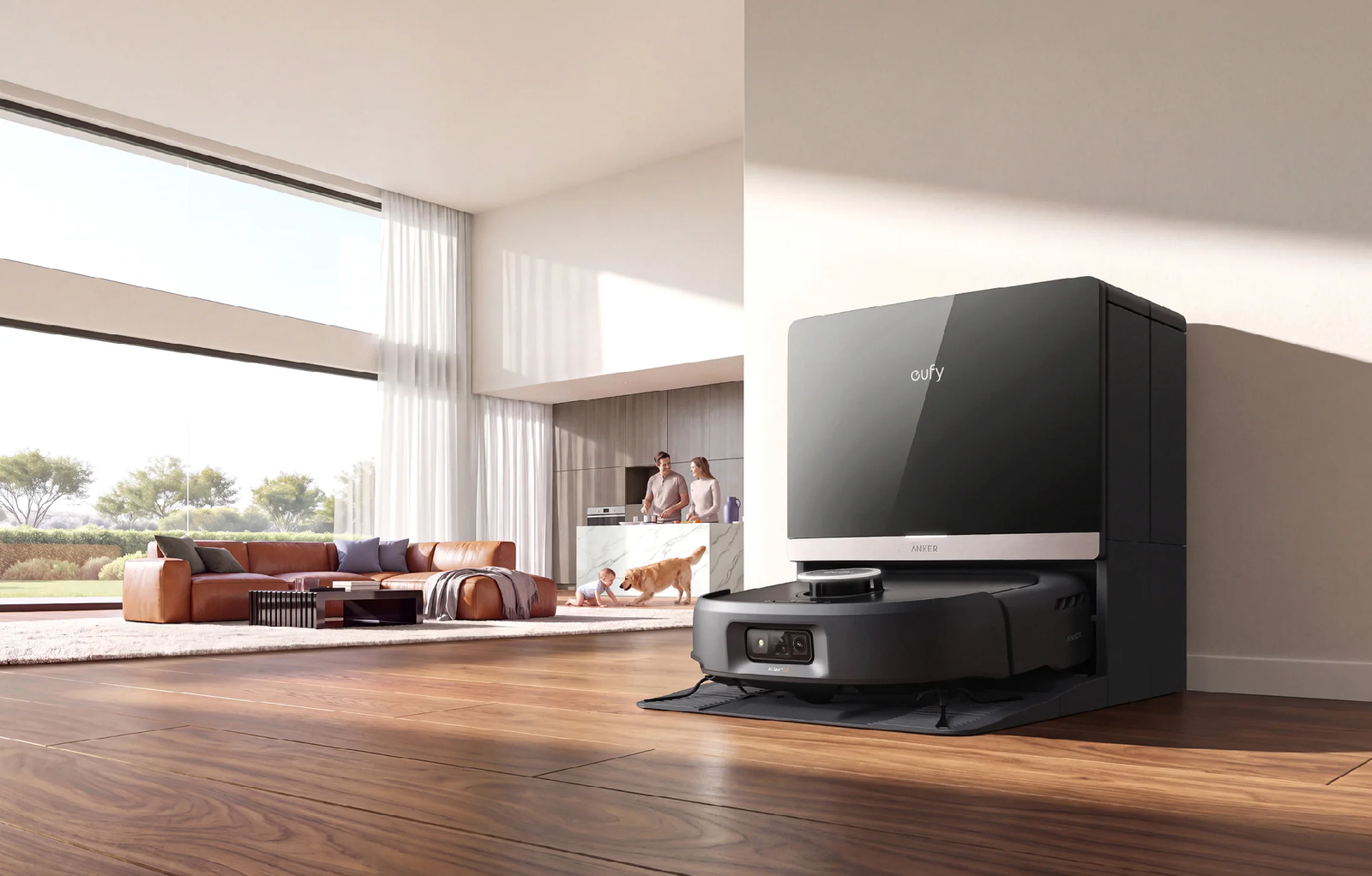
Should You Switch to a Self-Cleaning Mop Robot Vacuum?
Yes, if your robot mops several times a week or the pads often sit damp before anyone washes them. Households that already wash pads with detergent and dry them the same day may find hand-washing is enough. With most mopping robots, you still wash the mop pad yourself after each run: take it off, scrub it at the sink, and hang it up to dry. Skip a wash or leave the pad damp for a few days, and the gray water and sour smell come back. A self-cleaning robot vacuum mop can take over that chore, with a dock that washes and dries the mop automatically.
What follows covers why hand-washed pads start to smell in the first place, the part of that problem a dock actually takes over, what you still handle yourself, and a way to figure out which group your household falls into.
The real reason hand-washed robot mop pads start to smell
Two things cause most of the smell, a pad that doesn’t get a chance to dry and a pad that keeps soaking in its own dirty water. Dirt someone missed on the floor matters less.
The pad stays damp between runs
Leave a pad wet long enough and mold can start to grow on it, and that musty smell is one of the reasons a hand-washed pad starts to stink. It doesn’t take much for that to happen. A pad left clipped under the robot, or tossed in a heap by the sink until Saturday, can stay damp for days. Even right after a wash, thick microfiber holds so much water that drying takes a while, and a humid bathroom or a folded pad slows it down more.
Rinsing with plain water leaves dirt trapped in the pad
On many mopping robots, the mop is a fixed pad, a flat cloth clipped under the robot that nothing rinses during a run. Whatever it picks up in the kitchen stays in the fabric and gets wiped across the hallway and bedroom next, and the more dirty water it soaks up, the deeper the grime sinks into the microfiber. Holding it under the tap afterward gets rid of the gray color, but the grease and grime lodged in the fibers mostly stay put. According to the American Cleaning Institute, water on its own isn’t enough to get an oily, greasy stain out of fabric, and it’s the detergent that helps draw the dirt into the wash water. [Source: American Cleaning Institute, cleaninginstitute.org, How Cleaning Works] A pad that only gets rinsed goes back on the robot with some of the last run’s dirt still inside it, and over several runs the smell has room to build.
What changes when the dock washes the mop for you
With a dock, the mop gets rinsed more often, can be washed in warmer water, and starts drying as soon as the job ends. How far a self-cleaning model cuts the smell depends on how well it handles those three.
The mop gets cleaned during the run
With hand-washing, the pad gets cleaned at most once per run, after the whole house is mopped, and on a busy day it may not get washed until the next day or later. Docks rinse the mop a lot more often, though the designs aren’t the same. Some robots head back to the dock partway through a job and wash the pads before moving on to the next room. Roller-mop designs keep cleaning the roller on the robot itself while it mops, with fresh water coming from a clean-water reservoir and used water going into a separate dirty-water one, so the roller is rewet with clean water rather than whatever it just picked up. With either design, the mop doesn’t end the run carrying dirty water from every room.
Warmer wash water loosens what a cold rinse leaves behind
A quick rinse by hand usually means cold tap water, and on a busy day no detergent, which leaves kitchen grease and pet residue in the fibers. Warm water dissolves grease faster than cold, so docks that heat the wash water can get more of that residue out. Docks that add detergent on their own use it in every wash, which covers the days you would have skipped it. The less residue stays in the fabric, the less the smell has to build on between runs.
Drying starts as soon as washing ends
By hand, drying is the step that gets skipped most often, and a dock runs it automatically. Some stations blow room-temperature air over the mop, while others use heated air, which tends to dry fabric faster. With both types, the mop starts drying in place right after the run instead of sitting damp in a pile. For odor, this step matters as much as the wash itself, because a clean mop that stays wet can still turn musty. Of the three changes, drying is the one aimed squarely at the first cause above, a pad that stays damp for days.
What a self-cleaning station does not solve by itself
A dock doesn’t make the odor disappear. Part of it moves to the dirty-water tank and the wash tray, and those parts still depend on you.
The dirty-water tank collects what the mop washed out
Everything the dock rinses out of the mop ends up in the dirty-water tank. Leave that water sitting for a few days and it can smell about the way a forgotten pad did, so emptying the tank becomes the chore that replaces washing pads.
Tank size decides how often you step in
Most docks carry a clean-water tank you refill and a dirty-water tank you pour out by hand. A larger home, or a robot that mops daily, fills the dirty side faster. Stations plumbed into a water line and drain remove that chore, though they need a spot near a water supply and an installation step that a tank-based dock does not.
The wash tray and its drain need a look now and then
The tray where the mop is scrubbed catches hair and gray sludge, and a partly blocked drain there can leave standing water inside the station. So a dock cuts down hand-washing without removing upkeep altogether, and that remaining upkeep is worth weighing against the higher price.
Who should actually upgrade to a self-cleaning robot vacuum mop
Three kinds of homes see the biggest difference, each for a different reason.
Homes that get the most out of it
- Pet households. Paw prints and water-bowl splashes make the mop water dirty faster, so cleaning the mop during the run matters more here than in most homes.
- Homes that mop most days. That can mean a used pad to wash every single day, so hand-washing takes up the most time in these homes.
- People who don’t want to hand-wash every week. Pads that wait for the weekend stay damp for days, and the dock’s drying step covers that gap.
When hand-washing is still enough
A robot that mops once a week in a small apartment gives you time to wash the pad with detergent and dry it flat within a day. In that case a mopping robot without a wash station, or a vacuum-only model from eufy’s robot vacuum lineup, can cost less and take up less floor space.
Where the eufy Robot Vacuum Omni E35 fits
For pet households, homes that mop most days, and anyone who’d rather not hand-wash pads every week, the eufy Robot Vacuum Omni E35 uses a roller mop instead of fixed pads. Its HydroJet™ 2.0 Self-Cleaning Roller Mop is cleaned in real time on the robot through a dual water reservoir and a dual-scraper structure, so grime picked up in the kitchen isn’t wiped across the next room. When the run ends, the ThermoFresh™ 8-in-1 Hot Wash-and-Dry Station washes the mop with hot water, adds detergent on its own, and dries the mop with hot air. That covers the warm wash and the drying that tend to get skipped by hand, and in a home that mops daily, it means no pad heading to the sink after each run.
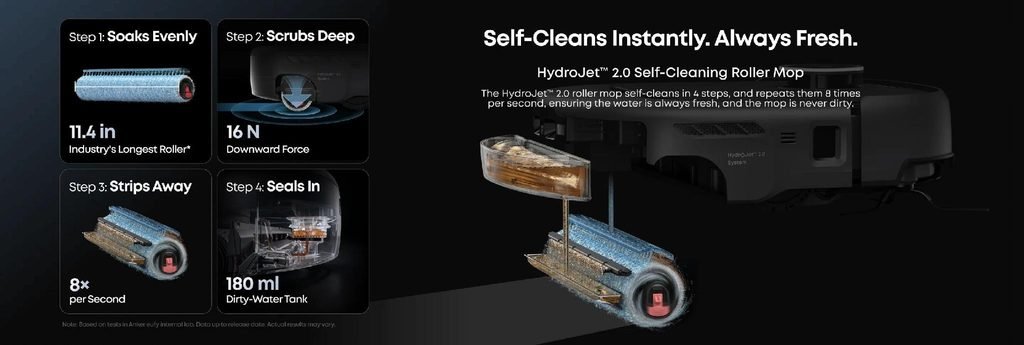
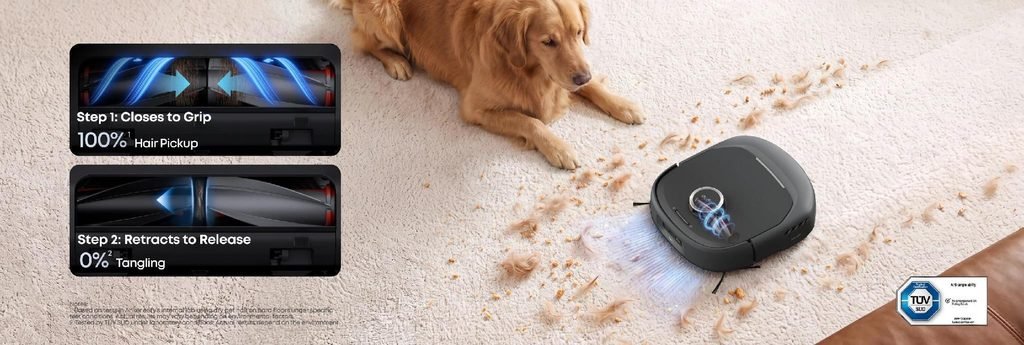
Pet homes and wood floors get a couple of extras. DuoSpiral™ Detangle Brushes are designed to keep pet hair from wrapping around the brush, and the roller presses down with up to 16 N of force on dried-on spots, such as the floor around food and water bowls. The robot also strips excess moisture from the roller, so wood floors don’t stay wet after mopping.
A few station specs are worth checking before you buy:
- Clean-water tank: 2.5 L
- Dirty-water tank: 1.8 L
- Station size: 14.57 × 17.60 × 16.18 in
- Other station functions: self-emptying dust, refilling the robot from the clean-water tank, and wastewater collection
You’ll still refill the clean-water tank and empty the dirty-water tank yourself. Before ordering, measure the spot where the station will go against the size listed above.
Conclusion
Whether a self-cleaning dock is worth paying for comes down mostly to one habit, which is how soon you wash and dry the mop pads after the robot mops. If you usually wash them with detergent and let them dry fully within a day, hand-washing already keeps the smell under control, and a robot without a wash station may be enough. If used mop pads tend to sit damp for several days, a self-cleaning dock handles the washing and drying for you, and what’s left on your side is emptying the dirty-water tank and wiping the dock now and then. If you’re not sure which group you’re in, keep track for a week or two of how long the mop pads stay wet after each run before you decide.